Sleep is vital, constituting approximately one-third of our every day, and ultimately one-third of our entire lives. Some may see it as relaxing and something to look forward to, while others may find it stressful or “not worth the time”. While it is essential, it is largely neglected by many individuals in the modern world. With countless responsibilities and tasks waiting to be done, a splash of water on the face and several cups of coffee are often what get most people through the day.
It has been long known that sleep is crucial to our health and wellbeing, being a time where our bodies will rest and recover, memories will consolidate, and processes such as tissue repair and muscle growth will occur. It is necessary that we receive adequate amounts of sleep to function and thrive.
Stages of Sleep
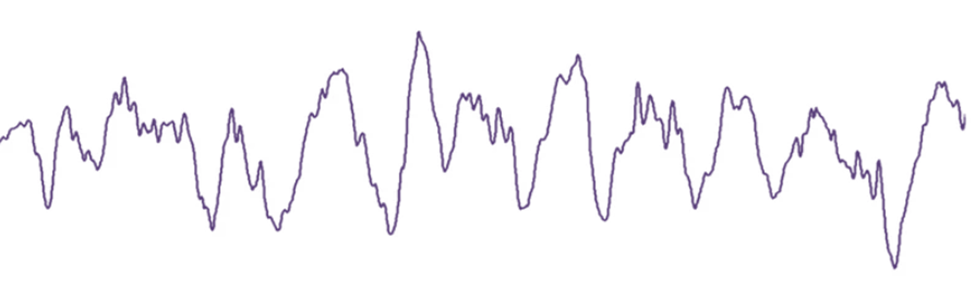
During sleep, we go through several cycles, in which we transition between REM (rapid eye movement) and NREM (non-rapid eye movement) sleep.
REM
The REM stage is where our bodies will enter atonia (temporary muscle paralysis), and our minds become highly active, creating vivid dreams and imagery, processing and sorting new information that we have acquired throughout the day.
NREM
The NREM stage is further subdivided into 3 stages: N1, N2, and N3. The first two stages, N1 and N2, are periods of rather lighter sleep, helping us transition into deeper sleep, and involves memory consolidation.
N3 is where we enter the deepest stage of slow wave sleep. It is during this stage that our bodies will go through the most physical restoration. Our immune systems become stronger, tissues get repaired, and muscles recover (Patel et. al, 2024). The reduction of inflammation that occurs is important in reducing the risk of developing inflammation-related chronic diseases (e.g. cancer, chronic pain, cardiovascular, metabolic, autoimmune, and neurodegenerative diseases) and all-cause mortality (Engert & Besedovsky, 2025).
Sleep also allows our bodies the chance to replenish itself with energy, particularly important for when we are sick or injured, but always crucial to prepare us for the next day.
General Guidelines – How Much Sleep Is Needed?
The amount of sleep needed may differ from person to person, depending on factors such as genetics and energy expenditure throughout the day. However the following, acquired from the Canadian 24-Hour Movement Guidelines, provides general recommendations for ideal sleep durations for different age categories:
- Children (aged 5-13 ): 9-11 hours
- Teenagers (aged 14-17): 8-10 hours
- Adults (aged 18-64): 7-9 hours
- Older Adults (aged 65+): 7-8 hours
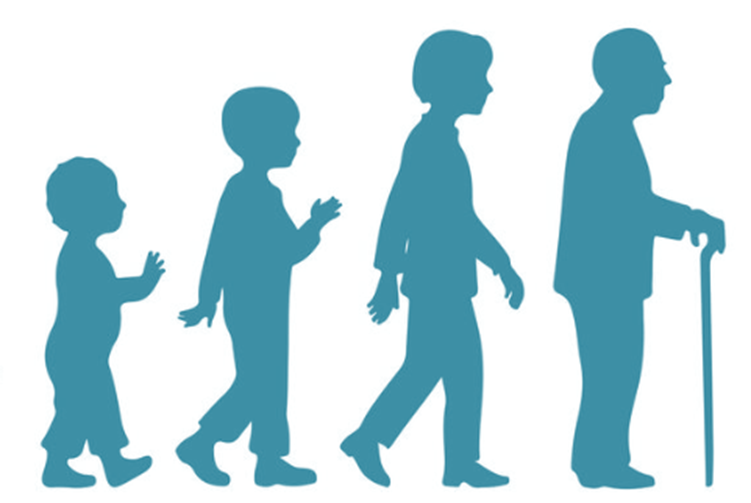
Our bodies’ ability to produce hormones that regulate our sleep also changes throughout our lifetime. With levels of melatonin peaking during adolescence, and declining throughout the years. This contributes to changes in sleep habits that older adults experience, along with their difficulty achieving the same 7-8 hours of sleep that their bodies may still require.
Sleep Deprivation

While people may experience sleep deprivation here and there, it can have a large impact on one’s functioning and health in the long run. Sleep deprivation is associated with an increased risk of many health issues including:
- All-cause mortality
- Metabolic Syndrome (e.g. diabetes, obesity)
- Cardiovascular diseases
- Mental health disorders (e.g. anxiety, depression)

(Shah et. al, 2025)
It is important to make room for sleep every night, even within the busiest of schedules. For individuals who deal with insomnia and other sleeping disorders, this may be easier said than done. Medications and sleeping equipment may aid the sleeping process, in addition to adopting various lifestyle habits.
Work is also a main factor behind the prevalence of sleep deprivation in modern society, causing chronic stress, elevated cortisol levels, and disrupted sleep patterns, particularly in those who work overtime or unconventional shifts. While we may occasionally experience the effects of jet lag from travelling across time zones, some individuals experience the same effects all the time, and this can negatively impact their health in the long run – something worth considering when deciding jobs.
Ways to Improve Sleep
Mattresses, Pillows, and Bedding
Choosing the right mattresses, pillows, and bedding, can help promote comfort and better sleep quality. Although it may ultimately depend on the individual’s personal preferences and require individual testing, studies generally recommend:
- Mattresses with medium firmness
- Pillows with curves that support the cervical spine
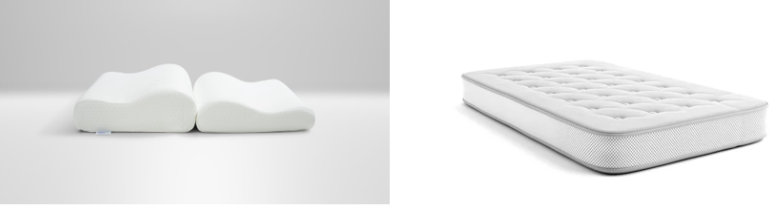
Studies describe mattresses with medium firmness as being the best for spinal alignment, and may help reduce the risk of back pain (Kovacs et. al, 2003; Radwan et. al, 2015; Caggiari et al, 2021). Similarly, the ideal pillow should have curves that support the cervical spine, which may reduce the risk of neck pain (Persson, 2009; Yim, 2015).
Ensuring that you are sleeping comfortably and well-supported is important not only for the sake of comfort, but also for the sake of health and wellbeing. Given the importance of getting enough quality sleep, it is worth the effort to search for equipment to make it the best experience possible.
Lifestyle Habits
Adopting certain lifestyle habits can also help promote sleep. For example:
- Relaxation techniques (e.g. deep breathing, meditation)
- Avoiding intake of stimulants (e.g. caffeine in tea, coffee) late in the day
- Creating a “good sleep environment” (e.g. suitable mattress, pillow, temperature, and lighting)
- Maintaining a consistent sleep schedule by sleeping and waking up at the same time every day, so as to not disrupt the circadian rhythm
- Regular physical exercise

In particular, lighting is very crucial, affecting the production and release of hormones such as melatonin and cortisol, which are involved in making us feel “sleepy” or “awake”. Taking action to ensure that your sleep environment is dim (e.g. turning down the lights, pulling the curtains), putting down electronic devices, and using accessories such as an eye mask, can all aid melatonin in guiding you into deep slumber.
Circadian Rhythm, Hormones, and Stress
As previously mentioned, the key “sleep” and “wake” hormones involved in our circadian rhythms are melatonin and cortisol, respectively. These hormones are chemical messengers released during different parts of the day, influenced by external factors such as light, and internal factors such as stress.
Cortisol
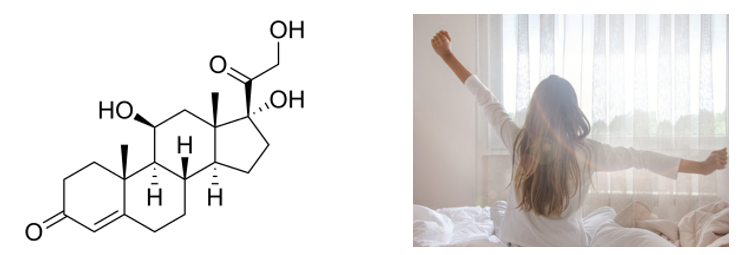
Cortisol is the body’s “wake” hormone. Levels of cortisol increase closer to the morning, helping us transition into alertness and ultimately waking up to tackle the day. In addition, cortisol acts as the main “stress hormone” in the body. When an individual is highly stressed, cortisol levels increase and melatonin production decreases, leading to difficulty and low quality sleep. Other factors such as caffeine intake contribute to the issue as well.
Melatonin
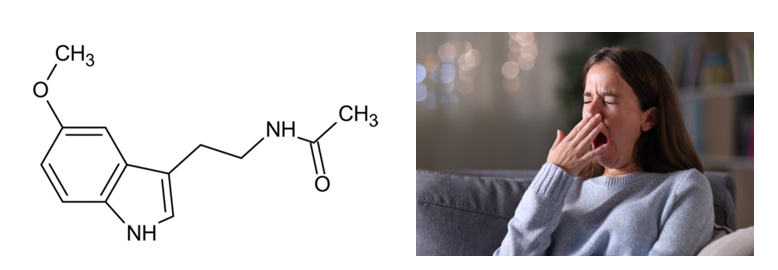
Melatonin is the body’s sleep hormone, produced and released when the day gets dark. With the rise of electronic devices and LED screens, it is important to note that blue-light emitted from these devices can suppress melatonin secretion (Wahl et. al, 2019) . While many people love to fall asleep watching videos online or scrolling on social media, it is important to put the devices down and reduce screentime close to bedtime.
Melatonin Supplements
As of recent years, melatonin supplements have been increasingly used, believed to aid those who have difficulty sleeping. Melatonin seems to be safe to use in moderation, at least in the short run, and may help some individuals with sleep problems. However, there is a lack of large-scale scientific studies that provide evidence to support its effectiveness and long term use. Prior to taking melatonin supplements, it is important to consult with a health professional to understand the product and the risks and benefits associated with it, including dosing, interactions with other medications, and possible side effects. Choosing a reputable brand, and products with an NPN (Natural Product Number) is important to ensure that it has been well researched to be safe and effective.
Sleeping Posture
Individual preferences for sleep posture may vary, and postures may change throughout the night. Different positions will put the spine in different alignments, some of which are more ideal than others. Ideally, the spine and its curves should be supported in the neutral position, avoiding excessive strain in any part of the body.
In general, there are three main postures:
- Supine (lying on the back)
- Lateral (side, either left or right)
- Prone (lying face down)
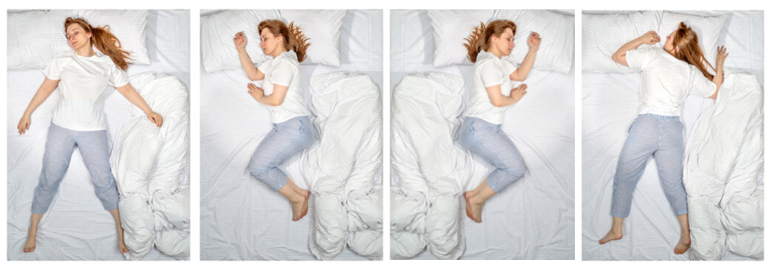
✰ Studies generally recommend the supine position, in which spinal alignment is ideal, preventing strain and risk of pain, mainly in the lumber (lower back) and cervical (neck) regions (Ylinen et. al, 2024; Saini et. al, 2025).
✰ However, statistics show that people mostly prefer side sleeping, and when done in good spinal alignment, this can be a good option as well.
In addition, some recommend adding a pillow underneath the knees (in supine position) or between the knees (in the side position) to further support spinal alignment.
Finally, sleeping in the prone position is least common and not recommended, as it increases strain on the spine (Saini et. al, 2025).
Pain and Sleeping
Those who suffer from chronic pain may find themselves struggling to fall asleep at night. This can become a vicious cycle where the pain prevents one from falling asleep, and lack of sleep further contributes to the pain. Research has shown that sleep can help reduce inflammation and increase one’s pain tolerance. It can be difficult to break this cycle, and it is important to find treatments to manage the root of the problem – the pain itself – before other aspects of your life become affected as well.
Various treatment options are available depending on the pain you are experiencing. For individuals who suffer from neck, shoulder, and back pain, consider options that may help to alleviate pain and provide relief, such as:
- Chiropractic treatment
- Registered massage therapy
- Staying physically active

As always, seek advice from a health professional to discuss safe treatment options and exercise regimens that are safe and suitable for you as an individual.
General Takeaways
- Adults generally need 7-9 hours of sleep per night
- Try to maintain a consistent sleep schedule and adopt good habits to improve sleep quality
- Long-term sleep deprivation can lead to an increased risk of negative health outcomes (e.g. chronic diseases, mental health disorders)
- Choosing the right type of mattress and pillow is important – ideally of medium-firmness and providing adequate support for the spine
- Seek help if you are experiencing long-term difficult with sleeping (e.g. getting diagnosed with a sleep disorder, treating underlying pain)
References
Caggiari et al. (2021). What type of mattress should be chosen to avoid back pain and improve sleep quality? Review of the literature. Journal of Orthopaedics and Traumatology, Volume 22(51).
Enzuntung, S. U & Beziehung, E. W. (2025). Sleep and inflammation: a bidirectional relationship. Somnologie, Volume 29, p. 3-9.
Kovacs et al. (2003). Effect of firmness of mattress on chronic non-spefici low-back pain: randomised, double-blind, controlled, multicentre trial. The Lancet, Volume 362(9396). https://doi.org/10.1016/S0140-6736(03)14792-7
Patel et al.(2024). Physiology, Sleep Stages. StatPearls. https://www.ncbi.nlm.nih.gov/books/NBK526132/
Persson, L. (2009). Neck pain and pillows – A blinded study of the effect of pillows on non-specific neck pain, headache, and sleep. Advances in Physiotherapy, Volume 8(3). https://doi.org/10.1080/14038190600780239
Radwan et al. (2015). Effect of different mattress designs on promoting sleep quality, pain reduction, and spinal alignment in adults with or without back pain; systematic review of controlled trials. Sleep Health, Volume 1(4). https://doi.org/10.1016/j.sleh.2015.08.001
Saini et al. (2025). Relationship Between Sleep Posture and Low Back Pain: A Systematic Review. Musculoskeletal Care, Volume 23(2). https://doi.org/10.1002/msc.70114
Shah et al.(2025). Effects of Sleep Deprivation on Physical and Mental Health Outcomes: An Umbrella Review. American Journal of Lifestyle Medicine. https://doi.org/10.1177/15598276251346752
Wahl et al. (2019). The inner clock – Blue light sets the human rhythm. Journal of Biophotonics, Volume 12(12). https://doi.org/10.1002/jbio.201900102
Ylinen et al. (2024). Sleeping Position Associated with Well-Being and Mattress Type Linked to Low Back Pain. Journal of Yoga and Physiotherapy, Volume 11(2). DOI: 10.19080/JYP.2024.10.555809
Yim, J. E. (2015). Optimal Pillow Conditions for High-Quality Sleep: A Theoretical Review. Indian Journal of Science and Technology, Volume 8(S5). doi:10.17485/ijst/2015/v8iS5/62330
24-Hour Movement Guidelines. csepguidelines.ca
Leave a Reply